
By: Connor Barclay
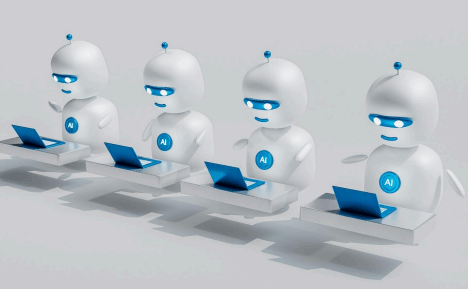
The question has been gnawing at students everywhere: Is artificial intelligence (AI) going to render my degree obsolete before I even graduate? Rest assured, the answer is probably not. However, it does force us to reconsider how we define job security in an AI-driven world.
As an education major, my future as a teacher is about as secure as any career can be in the age of AI. Despite teaching jobs not necessarily being threatened by the advent of AI, they’ve inarguably been changed by it. I’ve seen firsthand the level of AI abuse that runs rampant in schools, particularly in English classes. High school students are coasting by on AI-generated essays that fulfill the rubric requirements, but don’t impart any meaningful learning. Researchers at the University of San Diego have also noted that AI detection tools produce false positives, making enforcement difficult and often inconclusive. Currently, there’s no way to definitively prove whether a student’s sudden improvement in ability was a result of AI, so the grade often sticks without more concrete evidence. Even for students who steer completely clear of AI use, it still alters the classroom dynamic and assignment expectations by forcing teachers to address the possibility of misuse. So, while the profession itself may be secure, many facets are being altered by the mere existence of AI.
Compared to other jobs, teaching positions are considered less exposed to AI than many other positions, such as computer programmers or writers. “Exposure” in this case does not refer to how at risk a particular job is to being replaced by AI, but how capable AI is at completing certain tasks within that job. However, exposure can vary wildly for the same job based on how exactly it was measured. A recent study by Yale University compiled data from multiple studies with different metrics of AI exposure in the workforce, comparing job exposure across multiple sources. Researchers found that all sources agreed that occupations rooted in manual labor were the least exposed. In other words, those jobs have the least potential for AI to speed up task completion or improve efficiency. On the other hand, more technical fields were shown to have higher exposure on average, but with a lot more disagreement as to what degree. In short, just because a job is considered exposed, it does not necessarily mean that it is at risk, nor can the degree of exposure be objectively quantified.
Anthropic, the company behind the Claude LLM, attempted to circumvent these limitations in a recent study outlining their new framework of observed exposure for measuring the impact AI has on the labor market. Where exposure typically measures AI’s theoretical ability to speed up tasks of a particular occupation, their goal with observed exposure is to measure tasks that are not only possible to speed up, but actually are sped up by AI based on their own usage data. Their stance is that the new framework will allow for advanced notice of potential impacts of AI on the job market. However, other than a slight “tentative decrease” in the hiring rate of new employees aged 22-25, Anthropic reports that there is no visible impact of AI on the unemployment rates of the most exposed occupations.
You may have heard anecdotes about jobs, particularly more exposed ones such as computer programming, being lost because of AI-displacement. However, the currently available data does not support this.
Still, while you likely don’t have anything to fear about AI taking your job away anytime soon, you should start to think about how your prospective career may be affected by AI going forward. In their article on observed exposure, Anthropic claims, “AI can grade homework but not manage a classroom, for example, so teachers are considered less exposed than workers whose entire job can be performed remotely,” which is true, but incomplete. The notion of AI exposure inherently only deals with how teacher-end tasks are affected, with no insight into how students’ use of AI may play a role. With that in mind, exposure by itself is only a limited indicator of the total impact of AI on the occupation. It is important to keep in mind that even though jobs may be largely safe from AI-displacement, that does not mean they’ll remain unchanged.
Sources:
Anthropic. (2026, March 5). Labor market impacts of AI: A new measure and early evidence. Anthropic. https://www.anthropic.com/research/labor-market-impacts
Gimbel, M. (2026, February 19). Labor market AI exposure: What do we know?. The Budget Lab at Yale. https://budgetlab.yale.edu/research/labor-market-ai-exposure-what-do-we-know
University of San Diego Legal Research Center. (2025, December 4). The problems with AI detectors: False positives and false negatives. Law Lib Guides.
https://lawlibguides.sandiego.edu/c.php?g=1443311&p=10721367
Connor Barclay is a junior at Holy Family University, majoring in English Secondary Education. He enjoys reading and writing, both for school and pleasure, and climbing fake plastic rocks in his free time.




 hfutrilite.com
Leave a comment