
By: Taurean Jewett II
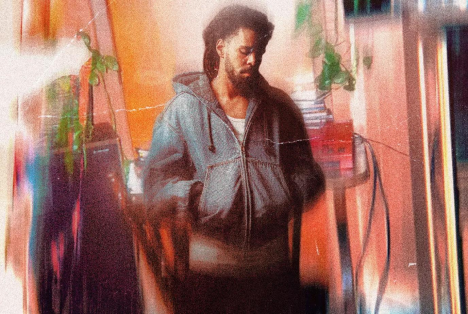
To start this off, I should make it very clear that I come into this album as a Cole fan. J. Cole was one of the backbone rappers of my generation and an essential part of my hip-hop journey. This isn’t to say I can’t be critical of Cole, but I do hold him in high esteem. Lyrically, Cole is one of the greatest ever, and that goes unchanged on The Fall Off. He presents things beautifully on this album, but it’s hard to ignore some of the flaws conceptually and how they highlight Cole’s biggest flaw: for a rapper of his pedigree, he has some of the most corny moments. That may be because he is typically off the grid, so we overall have fewer moments from him, and the corny ones become that much more memorable. Either way, he has a fair share of corny bars and opinions that become prevalent on this album as well.
Cole provides multiple unique flows on this album and shows his lyrical abilities with many standout bars throughout.
The Fall Off is an album Cole has been teasing for over half a decade, with bars all over his last album, The Off-Season, that served almost as a precursor for what was to come and, in my opinion, was one of the better albums he has managed to put out. The songs on The Fall Off are musically similar but conceptually different. Since the release of KOD, Cole has been cultivating his sound from that of Nas and Common to a newer and more modern variation that integrates trap drums to be more appealing to the new generation, continuing that approach on this album.
The flawed aspect of this album is its concept. Cole attempted to make a two-sided disc—Side 29 and Side 39—both sides reflecting on his own life and what it means for him to be back in Fayetteville at these different ages in his life. Jermaine has been quoted as saying he’s been working on his seventh and last album, The Fall Off, for ten years with one intention: “a personal challenge to myself to create my best work.” That’s a tall order for a man who has built a legendary career. The double disc is meant to be a journey through the labyrinth to conquer a wide breadth of styles and ideas, but it ultimately crumples under expectations few records could hope to meet.
The Fall Off feels less like a grand conclusion and more like a prolonged hesitation. Marketed as Cole’s defining statement, the album struggles under the weight of its own expectations, delivering moments of technical skill but very little emotional or creative payoff. Lyrically, Cole remains competent, but competence isn’t enough at this late stage of his career. Many verses revisit familiar themes—industry fatigue, self-reflection, and quiet superiority—without offering new insight. What once felt introspective now comes across as repetitive and safe, as if Cole is more interested in preserving his image than pushing his artistry forward.
The more I think about it, the more bewildering the concept of this album becomes, even with how good some of the songs on Disc 29 sound. When it comes to Cole’s output at age 29—his views about his hometown, his upbringing, and the ways in which hip-hop and fame changed his life and worldview, he wasn’t exactly secretive about that at the time. Actually quite the contrary: in 2016 Cole dropped 4 Your Eyez Only, which is widely known as his most personal and introspective album and one that has shaped the view of Cole in the larger hip-hop landscape more than even his most critically acclaimed album, 2014 Forest Hills Drive. This repetition of theme takes away from some of the introspection because there is a good amount of reframing done on the A-side of the album about what his opinions were at the time. While growing and having your view on previous decisions change is natural, actively going back to decontextualize things comes off as insecure and kills some of the kayfabe that goes into hip-hop culture and Cole’s persona.
This is only cemented by a feeling of bloating. The album eclipses a 100-minute runtime, which is extremely long for any album, and with how many topics and emotions are repeated, it feels as though a few tracks should have been cut for a higher-quality project.
I want to make it clear that I still really enjoy this album. I’ve listened to at least a few songs from it every day since it came out. “Safety” and “Who TF IZ U” have become staples on my playlist, and “I Love Her Again” has become an iconic hip-hop track for me, building off I Used to Love H.E.R. in a very interesting way. However, for Cole to present and build this album as his final work and magnum opus, it doesn’t feel as if it lives up to that expectation.
Cole was already in a very odd spot in his career. He has unanimously been viewed as one of the Big 3 of this generation, and when Kendrick Lamar and Drake began their very public feud last year, Cole got himself intertwined in it and ended up leaving a lot of his more diehard hip-hop fans disappointed that he didn’t step up to the plate and fight for the crown of the number one rapper; a crown he has spent the last half decade claiming on features. Once he was finally antagonized enough by fans to drop a diss track, he ended up bowing out, saying spiritually it simply didn’t sit right with him to attack his friends in this way.
With all of this surrounding Cole, the expectations for The Fall Off were through the roof, and he simply was unable to reach them. Despite providing a solid album overall, I don’t think it will get a chance to connect culturally with people the way it should have. It got buried by the hype of the recent A$AP Rocky album, as well as the promotion for the much-awaited album from Baby Keem. Cole ended up in a place he had discussed before—that of being the middle child. Despite bringing great effort, his emotional connection doesn’t bridge the gap that these other artists manage to for distinct generations.
The way Jay-Z, Nas, and Common were for my father, J. Cole is for me. But this also lends itself to an older generation of fans gravitating toward this sound of music, having artists they look at filling the roles Cole attempts to fill, while younger generations are not infatuated by what he brings to the table. In that sense, The Fall Off doesn’t feel like the closing chapter of a career. Instead, it feels like a reflection on a career that already knows its place in hip-hop history; even if it never fully reached the grand conclusion it was set to be.
Taurean Jewett II is in their third year at Holy Family University majoring in English with a minor in Creative Writing . They work on the Folio team and they contribute to Writers’ Bloc and Tri-Lite. They have an adoration for creative expression in any form.





Leave a Reply