
By: Brian Trainor
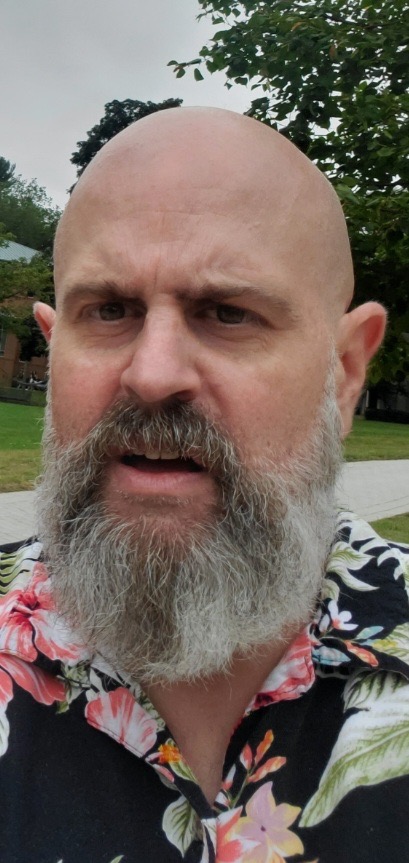
A role in university life that certainly does not get the recognition it deserves is that of the adjunct professor. Carrying class loads from multiple schools with multiple classes per school, the job is not for the faint of heart. I was given the pleasure to sit down with one Professor Steve Reed, whom I have spent 2 semesters with thus far. As I sat down with him, I was able to ask him numerous questions in regard to his career and what it means to be an adjunct.
Thanks for taking the time to answer some questions, before we get into it, can you tell the readers a little bit about yourself?
Yeah, so I am originally from Virginia. My dad was a shipyard worker and also in the military. My mother was really involved in the Methodist church, so I was raised religious. My parents represented a chasm in the south; it is actually something important to my fiction. My dad was more Appalachian, while my mom was more tidewater, so it’s a very specific mixture. I feel like the part of Virginia where I am from is sort of an untapped area for music and fiction. Bruce Hornsby, who was big in the 80’s, captures it well.
As an adjunct professor, you find yourself traveling to many different schools with a variety of environments. What keeps you traveling?
Oh, this is really interesting. Sort of politically-This is sort of a backstory, but I did sales for a while, and I hated a lot of aspects of it…I was really corporate for a while. I learned time management and some of the more cringier type things, which I apply to being an adjunct. I also don’t want to be affiliated with a certain institution because of the freedom in that. It is also really interesting to me to see how different schools approach English. As you know, English is constantly evolving. I’m teaching a lot of 101 classes, so yeah, my motivation is the excitement. It’s sort of like my wild west.
On the flip side, what would you say is the most taxing aspect (aside from the gas mileage) of being an adjunct?
Trying to stay inspired and trying to carve out time for writing is something I battle with. There are these ebbs and flows; your fall semester could be packed, and your spring could be packed. When you get to June, you end up not doing as much as you want. I sort of have this approach to inspiration where I feel like inspiration is a difficult thing to manage. I do well in a chaotic environment. I studied under Ben Marcus at Old Dominion, who thrived in silence. I am the opposite. I need sounds all around. When things get too slow, I don’t function as much.
Here at Holy Family, you teach 101, Public Speaking, and Creative Writing. Are there any classes you wish you could see being taught, or that you yourself have the ability to teach?
This is going to be really interesting because we had the creative writing class last semester. I sort of had this lack of understanding of poetry and saw it in a certain light. I felt like there were some pretty impressive moments artistically in the poetry workshops. I really enjoyed that. I would really enjoy a poetry class. I am also really inspired by the Book of Mormon. I would love a whole class on the Book of Mormon, but that would be insane. No one would ever take that. I’m not Mormon, but Mormonism inspires me, something about the purpose of it.
I know this, but the readers may not. You got your MFA from Brown. What drove you to focus on writing?
I did philosophy as an undergraduate. I wanted to be a lawyer. And then I took multiple writing classes, when I had Ben Marcus’ class, it got me very invested in it it.. He had a specific speech that he did that was very sports-oriented, in my opinion, but it motivated me. Then I decided, alright, I’m going to apply to MFA programs.
Are there any works you think everyone needs to read, author or title?
Probably not in the literary world, but some philosophy texts I’ve read. Being in time by Heidegger as Bullshitty as that sounds. I liked Wittgenstein. I think with my fiction pieces, I am trying to get a logic to them as the main driving force. If I have a fiction piece and the plot unfolds, I want the next sentence to be unexpected, but also could have happened. Wittgenstein sort of explored that with language.
Now for the cliché question: What inspires your writing the most?
Oh, not really in my own life, hardly anything from real life. I want my writing not to reflect any experience I have had. So I would say it is not direct. I do not want to write a story about being in Virginia that would stress me out a lot. I grew up running around being a punk. We did all these punk-oriented things. People go oh you should write that down and it just doesn’t seem important. I think writing should be an alternative to reality. I think most people see it as reflective. I think the cool thing about poetry is that it doesn’t need to have that direct connection.
Any advice for people aspiring to write or do any form of art?
I would say, and this is probably reflective of going to get my MFA, I was impressed with the level of banter that people had, with whom I went to get my MFA. I think that is another thing that I find inspirational. Actively talking, if that makes sense? I know a few people in my MFA program that I could have really funny and creative conversations with, and that trickles into my writing. As cliché as it sounds, taking in other types of media is going to help you out and, consequently, impact your writing style.
Do you have anything you want to say to your students here at Holy Family University at the end of the year? Any final words you want to leave them with?
Yeah, I mean, I guess this is sort of dadish. A lot of times in college, everyone is looking for the next moment. In reality, it’s sort of the moment right now that has a lot of opportunities. It sounds really corny. The Buddhists they want to be like in the moment in a specific way. I think a lot of times people are looking for the next step in college, but you can have some pretty amazing experiences.
Brian Trainor is a third year English major at HFU with a minor in Philosophy. In his free time he enjoys reading, entomology, and sports.




Leave a Reply