
By: Lily Marchiafava & Brian Trainor
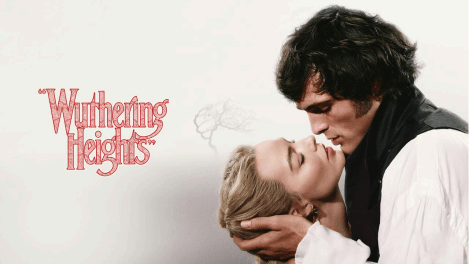
The 2020s thus far have seen an overwhelming amount of remakes and reimaginings. From critically acclaimed films like All Quiet on the Western Front and The Batman, to 2025’s Frankenstein, and even James Gunn’s Superman, many of these films have been received quite well. However, not all remakes are created equal. With that being said, Emerald Fennell’s Wuthering Heights is a perfect example of why you often should not attempt to “improve” on someone else’s work.
The opening credits read: “Based on Emily Brontë’s novel.” If only we had known what we were about to watch, perhaps we would have snuck into a different theatre. Because this is not so much an adaptation of Wuthering Heights as it is a film that borrowed some names, a vague location, and then proceeded to do whatever it wanted with the rest. An argument could hardly be made that this was simply a “different interpretation.” What Fennell truly took from Brontë was Catherine, Heathcliff, and the moors– with even those feeling optional by the end.
Also, by the end, we concluded that it was, in simple terms, one of the most misguided adaptations of a book that we had ever seen, in a way that feels not only disrespectful to Emily Brontë but to literature and art as a whole.
Fennell, the 40-year-old filmmaker from London who first garnered attention in period dramas, including The Crown, and a remake of Leo Tolstoy’s Anna Karenina, should, in theory, understand the aesthetic of the mid 1800s. One would hope. The opening scene alone dashes all expectations of a faithful period piece. What begins with a black screen, the noises of squeaking wood and a grunting man lead the viewer’s expectations to the obvious. It is only made worse when we see what was going on.
A man, being hanged, while onlookers party, drink, and kiss beneath him. As the camera whips around the scene, we get a lingering last look at the dying man as the camera pans down to him having an erection, and young Cathy watches… Yes. You read that right. Fennell explains in an interview with USA Today that the inclusion was entirely purposeful and needed to “set the tone.” Even citing that “this is what the Gothic is…it tells us so much about who she is (Cathy) but so much about Brontë, too.” Which, to anyone who has read the 1847 novel, is probably the single worst explanation of Brontë’s Gothic imaginable. Her novel is suffocating, psychological, and interior. Certainly not a carnival spectacle that is aestheticized cruelty played for edge.
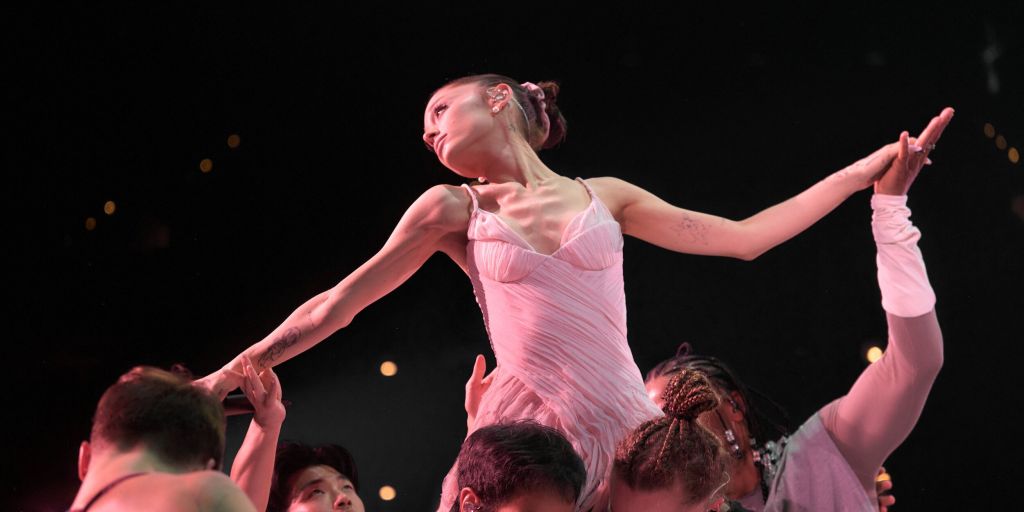
The visual confusion does not stop there. The costume design, particularly for Catherine, played by Margot Robbie, is horrendous. Looking as though it’s wandered from a pastel children’s cartoon. Think Strawberry Shortcake, or Pinkalicious. It makes us question whether Fennell was concerned at all with historical authenticity or if she just used Brontë’s title for publicity of her erotica smut film.
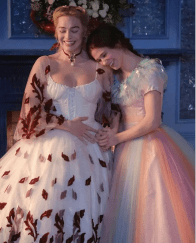
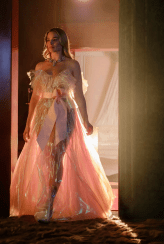
This film was marketed as a tragic, swoony love story just in time for Valentine’s Day! But Wuthering Heights was never meant to be a Valentine’s Day romance. Romantic? Yes. Dysfunctional and incredibly toxic? Also, yes. Even more so. (Which may be the only part they got right.)
Fennell removes many of the detrimental, uncomfortable aspects of the novel that make it a timeless classic. Most notably, the entire second half of the book. The generational continuation of trauma and revenge is completely erased. We miss out on Catherine and Heathcliff’s children, the cyclical nature of cruelty, and the real slow burn of consequence. Not to mention, what isn’t mentioned once is Catherine’s brother. Yes, the catalyst of the main conflict in the novel. The brutal abuser of Heathcliff was completely erased.
Instead, what we are given are invented scenes clearly designed for shock value. A particularly baffling addition includes Catherine suggestively fingering a gelatin-encased fish at the dinner table after “coming in contact” with her sexual desires. The contact that triggered this was an incredibly brutal, masochistic, bondage encounter she witnessed between servants. Weird thing, right? We thought so too.
Even Healthcliff’s identity is flattened. In Brontë’s novel, he is described as darker-complexioned, often referred to for his “gipsy features;” his racial ambiguity and outsider status are crucial to the social tension of the story. That complexity, the racial, social, and class undercurrents, is stripped away here and replaced with a marketable brooding archetype. What remains feels less like Gothic tragedy and more like a spicy Booktok adaptation.
Perhaps the most disturbing change is the portrayal of Isabella. In the novel, Isabella’s infatuation with Heathcliff leads to a deeply abusive marriage. Brontë, of course, does not romanticise this. It is meant to be horrifying. It reveals Heathcliff’s cruelty and shatters the illusion of him as a romantic hero that Fennell aimed for when casting the beloved Jacob Elordi.
The film, however, does something far stranger. In one scene, Isabella is shown chained around her neck, barking on command like an obedient dog, and eating food out of Heathcliff’s hand as he stands over her. This moment suggests eroticism rather than condemnation. Again, it aestheticises. What should be a brutal depiction of domestic abuse instead plays out like a dark comedy. It is despicable and disgusting.
If there is anything remotely redeemable about this film, it lies in moments of performance. Jacob Elordi plays a decent, brooding, emotionally volatile love interest (though whether he should have been cast in the role at all is another conversation entirely). Margot Robbie gives a flawed yet occasionally interesting performance as someone who does resemble Catherine Earnshaw. That being said, the movie would be a fine romance/drama involving the two. It just is not a fine adaptation of Wuthering Heights. Going into the film and thinking you will be seeing a faithful adaptation of a novel that is frequently cited in the top 100 novels of all time will certainly leave you disappointed.
The first portion of the film focuses on young Heathcliff, and Cathy is also not completely awful. Owen Cooper, coming off his critically acclaimed role of Jamie Miller in Netflix’s Adolescence, plays a compelling “young Heathcliff,” while “young Cathy,” played by Charlotte Wellington, appears in her first-ever acting credit. For a brief moment, you think you might be watching a tragic coming-of-age drama that understands emotional volatility. But what develops out of this childhood portion feels like two completely different movies. And neither one resembles Brontë’s novel in any meaningful way.
Even scenes that are somewhat bearable are cut short by the baffling inclusion of a soundtrack done entirely by British pop artist Charli XCX. Tender moments that should carry emotional resonance instead provoke laughter when these glossy, anachronistic vocals cut right through the dialogue. It feels less like a considered artistic choice and more like Fennell using music she personally enjoys to listen to in the shower rather than music that could actually serve the film. A Victorian Gothic tragedy underscored by modern pop about cocaine and clubbing was certainly… a choice. Imagine that. Now, you don’t have to!
To reinterpret a classic is not inherently wrong. But to misunderstand it so thoroughly is something else entirely. To cast two of Hollywood’s hottest actors to gain attention, eroticise abuse, and strip the novel of its moral, social, and racial complexity, but slap the title and little else on it is plain wrong. Our final thought is that Emily Brontë died 178 years ago tragically at the age of thirty from Tuberculosis, and it’s safe to say that this film is the worst thing that has ever happened to her.
Sources:
Cover Img: https://carolinatheatre.org/events/film/wuthering-heights/
https://www.usatoday.com/story/entertainment/movies/2026/02/13/wuthering-heights-opening-sc ene-hanging-spoilers/88553688007/
Margot Robbie’s outfit photos from Vogue
Lily Marchiafava is a third year English Student. She is President of Writers’ Bloc, Tri-Lite, and is on the Folio team. Lily’s interests include literature, creative writing, fashion, music, and thrifting.
Brian Trainor is a third year English major at HFU with a minor in Philosophy. In his free time he enjoys reading, entomology, and sports.




Leave a Reply